
You can get rid of rats without poison by combining natural repellents like peppermint oil and cayenne spray with humane live traps placed along rat pathways pest control for rats. Be sure to seal entry points using steel wool and caulk to block access. Keep your space clean by removing food sources and clutter that attract rats. Ultrasonic devices and encouraging natural predators, like barn owls or feral cats, also help reduce rodent presence. For a thorough approach, there are more strategies you can apply to secure your home effectively.
Understanding Rat Behavior and Habits
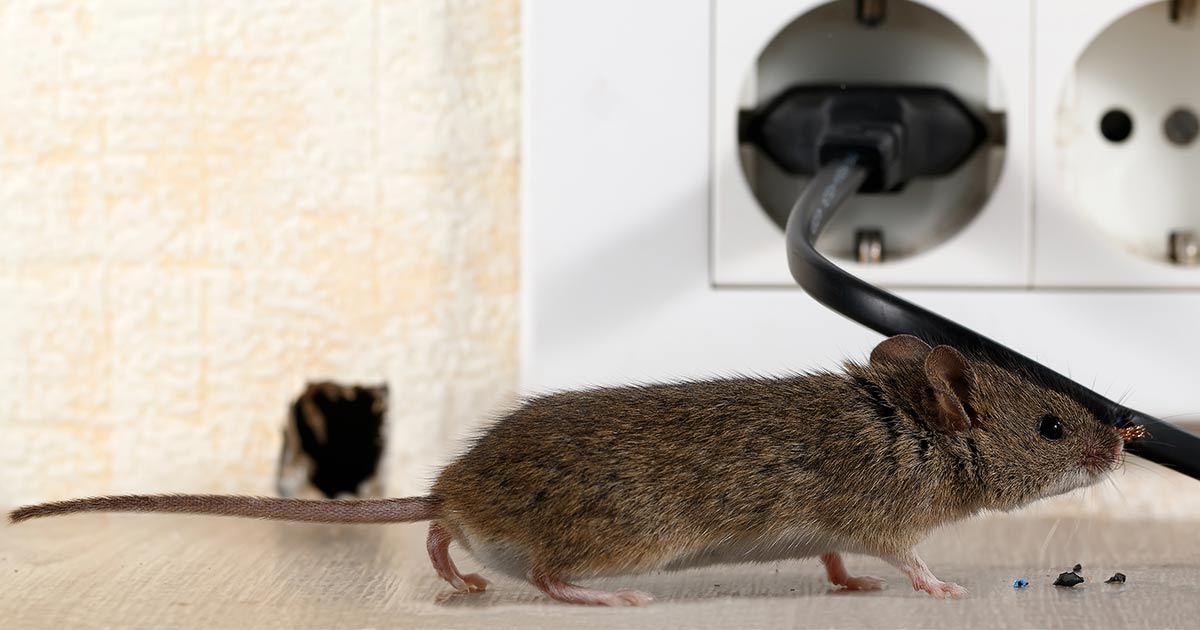
Before you can effectively get rid of rats without poison, you need to understand their behavior and habits. Rats are primarily nocturnal, meaning they’re most active at night, which is when they forage and explore. Knowing this helps you time your interventions effectively. They have a complex social structure, often living in groups with established hierarchies. This social system influences their movement patterns and nesting choices, usually close to food and shelter. By recognizing these habits igreenasia, you can disrupt their routines and habitats, making your efforts more successful. You’re not just reacting blindly; you’re using knowledge to regain control of your space, ensuring freedom from infestations without relying on harmful poisons. Understanding these traits is the first step toward a safe, effective solution.
Natural Rat Repellents You Can Use at Home
You can keep rats at bay using natural repellents found right in your home. Essential oils like peppermint, homemade herbal sprays, and certain plant-based deterrents work effectively without harmful chemicals. Let’s explore how to use these simple, safe methods to protect your space.
Essential Oils That Repel
Frequently overlooked but highly effective, essential oils offer a natural way to repel rats without resorting to harmful chemicals. You’ll find peppermint oil especially useful, thanks to its proven peppermint efficacy—it disrupts rats’ sense of smell, making your space uninviting. To use it, simply soak cotton balls with peppermint oil and place them near entry points or suspected nests. While citronella oil is another option, be aware of its citronella limitations: it tends to evaporate quickly and may require frequent reapplication to maintain its repellent effect. Unlike poisons, essential oils allow you to maintain control over your environment safely and responsibly. By incorporating these oils, you’re choosing a practical, humane approach to discourage rats and keep your home free from unwanted guests.
Homemade Herbal Sprays
Often overlooked, homemade herbal sprays provide a simple and effective way to deter rats using ingredients you probably already have at home. You can easily create a mint spray by steeping fresh mint leaves in hot water, then straining and transferring the liquid to a spray bottle. Rats strongly dislike the smell of mint, making this spray a natural barrier around entry points or nesting spots. For a stronger deterrent, try a cayenne mist by mixing cayenne pepper with water and a bit of dish soap to help it adhere to surfaces. Spray these areas regularly, especially in hidden corners and near food sources. These herbal sprays offer a safe, chemical-free alternative to poison, empowering you to protect your space without compromising your freedom or safety.
Plant-Based Natural Deterrents
Plant-based natural deterrents consistently offer a practical and eco-friendly way to keep rats at bay without resorting to harmful chemicals. You can start by incorporating peppermint planting around your property. Rats find the strong, minty aroma overwhelming, which discourages them from entering your space. Additionally, castor bean is a powerful natural repellent; its bitter taste and scent are unpleasant to rodents, making it an effective barrier. Using these plants not only deters rats but also enhances your garden’s health and appearance. Remember to maintain these plants regularly for continual protection. By choosing peppermint planting and castor bean, you’re embracing freedom from toxic poisons while protecting your home naturally and responsibly. This method supports a safer environment for you, your family, and local wildlife.
Humane Trapping Methods for Rat Removal
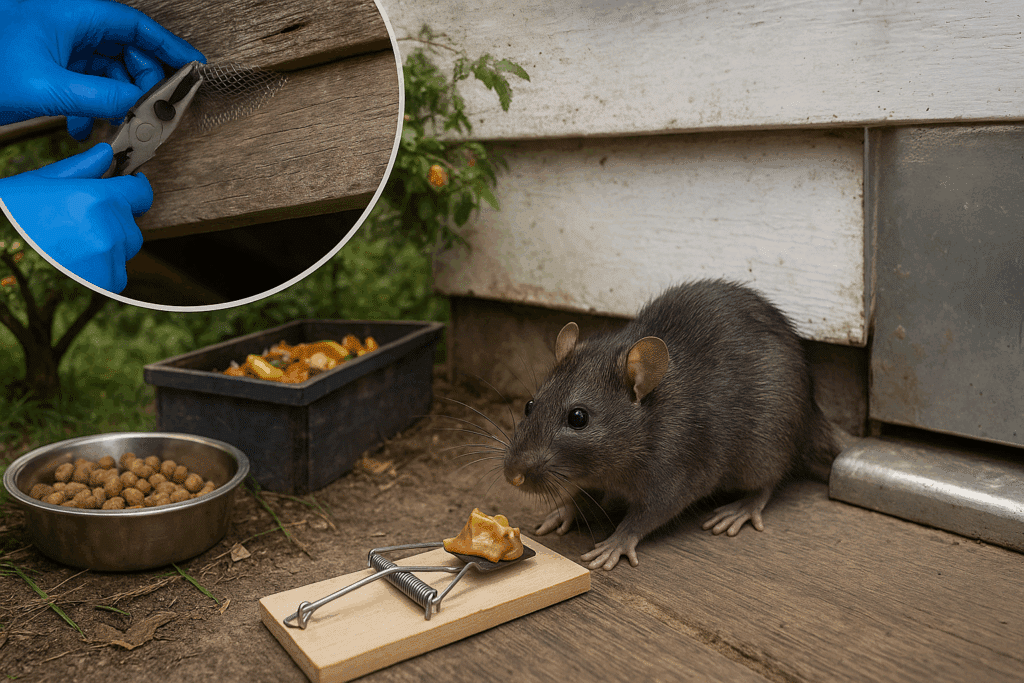
Consider using humane traps to catch rats without causing them unnecessary harm. Live capture methods, such as tunnel traps, allow you to contain rats safely and release them far from your property. These traps work by guiding rats into an enclosed space they can’t escape. Before setting traps, try scent training by placing nesting materials or familiar smells inside to lure rats effectively. This approach increases your chances of successful capture while minimizing stress to the animals. Once trapped, focus on nesting removal to eliminate rat habitats around your home, discouraging their return. By combining live capture with thoughtful nest management and scent training, you maintain control over your environment without resorting to poison, respecting both your freedom and the wellbeing of local wildlife.
Sealing Entry Points to Prevent Rat Infestations
You’ll want to start by identifying common entry points like gaps around doors, windows, and pipes where rats can squeeze in. Once found, use durable sealants such as steel wool combined with caulk or metal flashing to block these access points effectively. Sealing these openings is a vital step to prevent rats from returning and infesting your home again.
Identify Common Entry Spots
Before you can effectively seal your home against rats, you need to know exactly where they’re getting in. Start by inspecting common entry points like attic vents, which often have gaps or damaged screens that rats exploit. Check around your foundation for garden burrows—small holes or tunnels near plants and flower beds signal active rat activity. Don’t overlook spaces around doors, windows, and utility lines where rats can squeeze through tiny cracks. Pay special attention to areas where materials meet, such as where wood joins brick or concrete. By carefully identifying these spots, you gain control over your home’s defenses, cutting off rats’ access before they establish themselves inside. This proactive approach empowers you to protect your space without relying on harmful poisons.
Use Durable Sealants
Once you’ve pinpointed where rats are sneaking into your home, the next step is to firmly block those access points. Using durable sealants like epoxy caulking and polyurethane sealant provides a reliable barrier against persistent rodents. Epoxy caulking hardens into a tough, chew-resistant material that rats find difficult to penetrate, making it ideal for small cracks and gaps. Polyurethane sealant, on the other hand, offers flexibility and strong adhesion, perfect for sealing larger openings and areas prone to movement. Applying these sealants correctly guarantees no weak spots remain, effectively cutting off rats’ entry routes. By investing time in sealing your home thoroughly, you maintain control over your space and protect your freedom from unwanted infestations—without relying on toxic poisons.
Maintaining Cleanliness to Deter Rats
Although rats can find shelter in many places, they’re most attracted to areas where food and waste are readily available. To keep them at bay, focus on clutter removal—clear out unnecessary piles where rats can hide. Proper food storage is essential; use airtight containers to deny them easy access. Regular sanitation is non-negotiable; clean up crumbs, spills, and pet food promptly to eliminate food sources. Effective trash management also plays a vital role—secure your bins with tight lids and remove garbage frequently to prevent attracting rodents. By maintaining these practices consistently, you create an environment that’s inhospitable to rats, giving you the freedom to enjoy your space without worrying about infestations. Staying vigilant with cleanliness is your first line of defense against unwanted visitors.
Using Ultrasonic Devices as a Rat Deterrent
Keeping your space clean is a strong deterrent, but sometimes you need an extra layer of protection against rats. Ultrasonic devices offer a chemical-free solution by emitting high-frequency sounds rats find uncomfortable. To maximize ultrasonic effectiveness, you’ll want to focus on proper device placement—ideally near entry points or areas where rats are active. Keep in mind, these devices work best in open spaces since walls and furniture can block sound waves. While ultrasonic devices don’t kill rats, they discourage them from settling in your home, giving you more control over infestations. Remember, combining ultrasonic deterrents with other methods, like sealing gaps and maintaining cleanliness, boosts your chances of success. This approach keeps you free from poisons while effectively managing rat problems.
Encouraging Natural Predators to Control Rat Populations
Attracting natural predators is a practical way to reduce rat populations without relying on chemicals or traps. You can encourage barn owls, feral cats, and other predators to help keep rats at bay, giving you a natural, balanced solution. To do this effectively, consider:
- Installing nesting boxes to invite barn owls to roost nearby
- Providing shelter spots or feeding stations that support feral cats
- Maintaining a diverse garden habitat that attracts snakes and hawks
- Avoiding pesticides that could harm these beneficial predators
Conclusion
By understanding rat behavior and using safe alternatives like natural repellents, humane traps, and ultrasonic devices, you can effectively manage rats without poison. Make sure to seal entry points and keep your space clean to prevent infestations. Encouraging natural predators also helps keep rat populations in check. Taking these practical, non-toxic steps will protect your home and health, giving you peace of mind without harmful chemicals.